


CAFIQUE Project: Development of Intelligent Aging Room Adapted to the Reality of Artisan Cheese Dairies
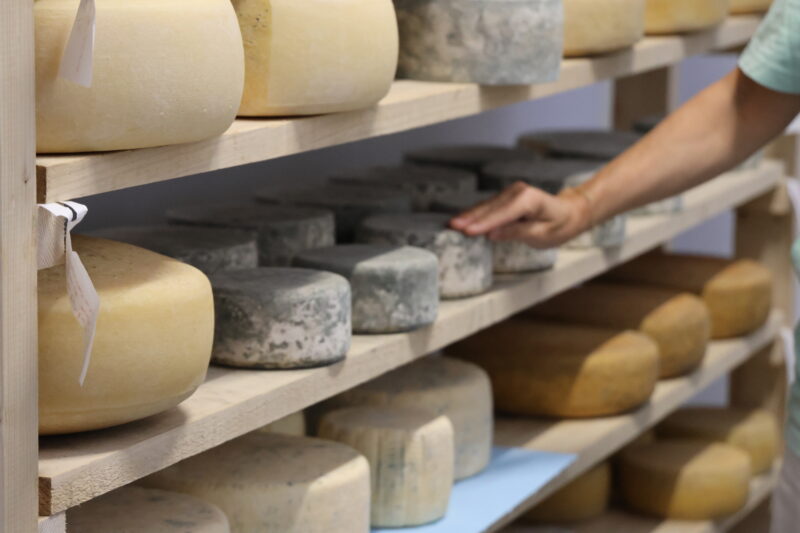
Although the artisan cheese sector is becoming increasingly professionalised, a fundamental reality remains: the sector is predominantly composed of dairies operating at small or medium production volumes, often with limited facilities and resources, yet with very high standards in terms of product quality. In this context, the ripening process is one of the key factors influencing the final outcome.
The main challenge lies not only in managing different cheese typologies; production volume itself is a critical constraint. Ripening chambers and most technologies currently available on the market are designed for large-scale production, following an industrial logic. As a result, artisan dairies frequently rely on solutions that are not appropriate from either a dimensional or functional perspective, which directly affects the control of the ripening process and, ultimately, product quality.
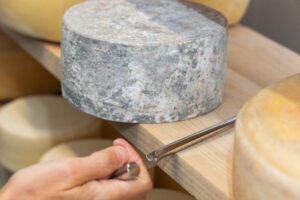

The CAFIQUE project was conceived to address this need. Its objective is to develop intelligent ripening systems tailored to the actual production scale of artisan cheesemakers, taking into account not only the technological requirements of different cheese types, but also small and variable production volumes. This implies designing equipment from the outset to operate under dynamic conditions: varying load levels, progressive incorporation of new batches and continuous variability.
A Solution Based on Inter-cooperation
The complexity of this challenge requires complementary contributions, and therefore the project has been structured around a model of inter-cooperation:
- The ESNEKI Dairy Centre (Leartiker) provides applied sector knowledge and experimental capacity, assuming the technical leadership of the project. Its in-depth understanding of the realities of artisan cheesemaking enables the identification of specific needs and the adaptation of solutions accordingly.
- KIDE transforms this knowledge into an industrial solution, developing the design, manufacture and optimisation of the equipment, ensuring its applicability and scalability.
- Mondragon Unibertsitatea contributes advanced understanding through numerical modelling and simulation, providing a solid scientific basis for optimising the internal conditions of the equipment.
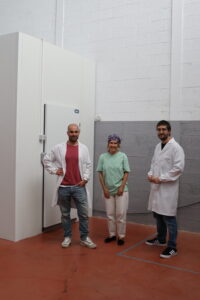
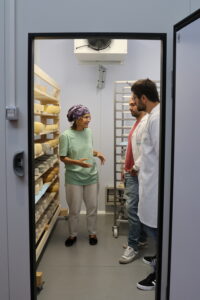
Through this collaboration, the leadership of the ESNEKI Dairy Centre ensures that solutions are grounded in the real needs of the sector; KIDE’s industrial capability translates them into practical applications; and Mondragon Unibertsitatea provides scientific rigour.
Furthermore, this collaboration is not conventional: all three entities are cooperatives within the MONDRAGON Corporation. This elevates the concept of inter-cooperation, as shared values (trust, transparency, commitment and a common goal orientation) facilitate and strengthen the working dynamic. Knowledge is shared naturally, decisions are made in a coordinated manner and the project evolves collectively.
Leadership of the ESNEKI Dairy Centre: Innovation Driven by Sector Reality
At the core of the project lies the leadership of the ESNEKI Dairy Centre. Beyond technical expertise, its key value lies in its direct experience within the artisan cheese sector and its ability to transfer this knowledge into the innovation process.
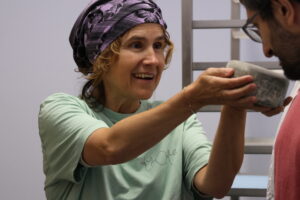
This involves working under real conditions: producing and ripening a range of cheese types, continuously varying the chamber load, introducing new batches while others are at advanced stages of ripening, and analysing the impact of environmental conditions.
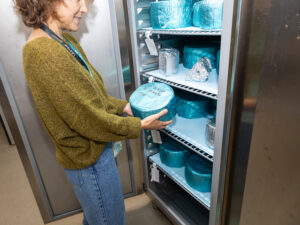
In addition, continuous monitoring of critical parameters (temperature, humidity, CO₂, etc.) is carried out, linking the collected data to product quality. This enables the ripening process to be understood as a dynamic system, where cheeses, equipment and external conditions interact.
This approach allows the design of equipment not for ideal or same conditions, but for the actual operating environment of the sector: variable volumes, diverse typologies and limited resources.
Intelligent Control and Quality Assurance
Within this context, intelligent control, sensorisation and advanced data use become key elements. The objective is not only to control parameters, but to ensure homogeneous conditions throughout the entire system, regardless of load level.
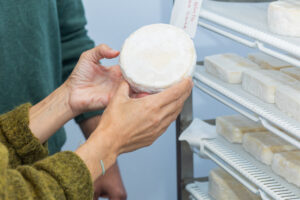
In this way, cheese quality becomes the result of a controlled and optimised process rather than a matter of chance.
It is also worth highlighting that the experimental trials carried out throughout the project and the knowledge generated have enabled a direct transfer from research to industry. As a result, in the short term, KIDE will begin commercialising a new ripening chamber adapted to the needs of artisan dairies, bringing the knowledge developed within the project into practical application.
In this context, the ESNEKI Dairy Centre reaffirms its strong commitment to strengthening the cheese sector and its vocation to act as a strategic partner: generating knowledge, transferring it and contributing to the development of real, applicable solutions. Initiatives such as CAFIQUE demonstrate that our role extends beyond research: we grow alongside the sector, collaboratively building the foundations for a more competitive and sustainable future.