
QueRed celebrates its annual meeting in Valencia
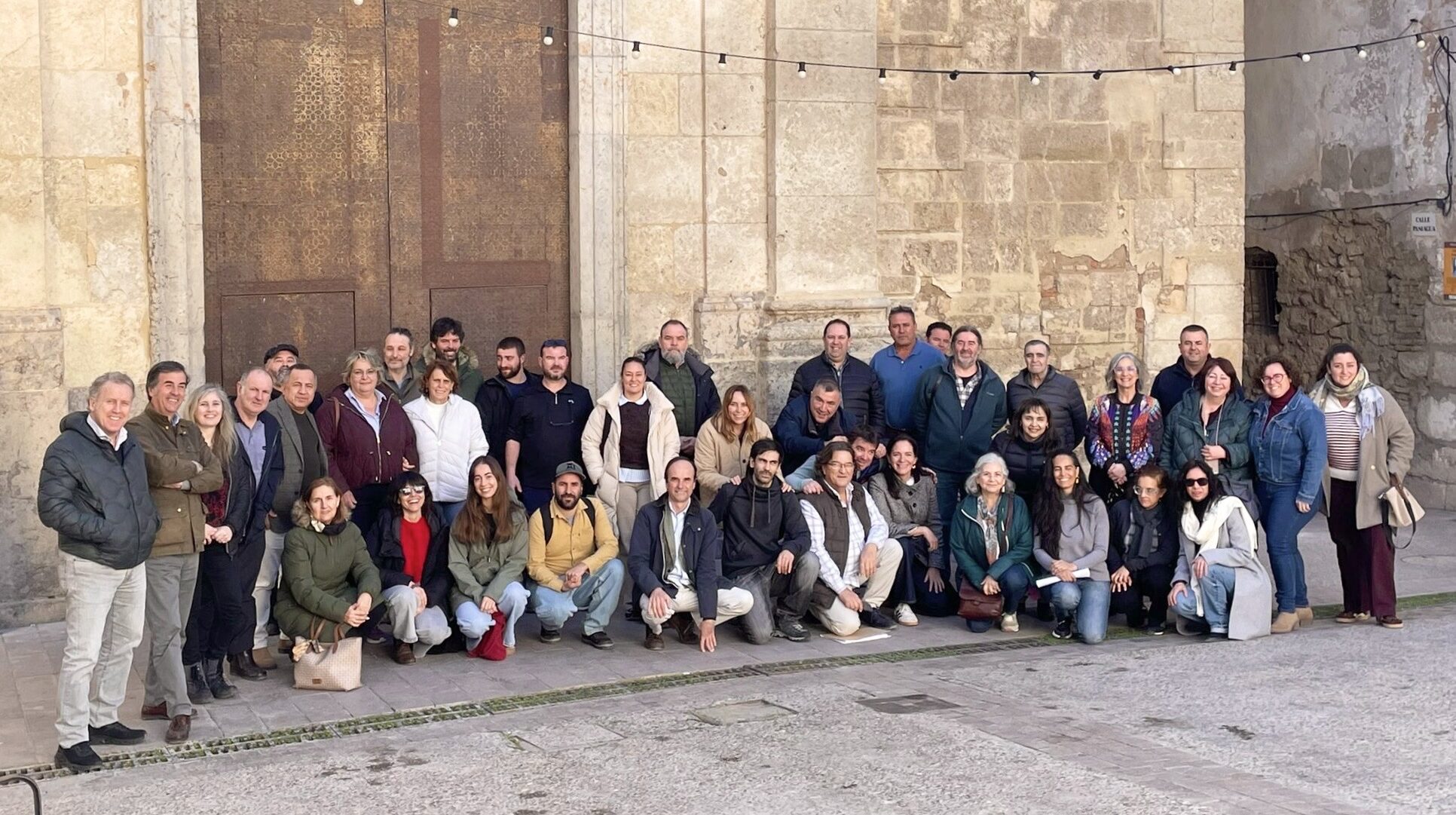
This year, the Valencian Community hosted the annual meeting of QueRed, the Spanish network that brings together and represents small and medium-sized rural and artisan cheese makers in Spain. An event that, in addition to bringing together members at its general assembly, served as a space for exchange, learning, and collective work for rural and artisan cheesemakers.
The program combined training sessions with technical visits that offered an up‑close view of various aspects of the sector. Among the most noteworthy activities, attendees had the opportunity to visit two leading dairies in the region: Los Corrales cheese dairy in Almedíjar (Castellón) and Hoya de la Iglesia cheese dairy in Los Pedrones (Requena). Both visits offered a direct insight into the artisanal work carried out in the region, as well as the values that define these cheese dairies: proximity, care for the process, and a strong connection with the environment.
During the meeting, QueRed presented its report and defined the shared challenges for the coming months. Open dialogue, the exchange of concerns, and collective reflection helped shape future lines of work and strengthened the sense of community that characterizes the organization.
A meeting to continue building networks
QueRed’s annual meeting is held each year in a different location, always in places with a significant presence of associated cheesemakers. Beyond its formal components, the gathering offers an opportunity to learn from other contexts, exchange knowledge, and strengthen professional ties. The programme typically includes workshops, technical visits, and other activities that enrich the meeting. This year, the event took place from 20 to 22 February.
The cheese sector in the Valencian Community
The Valencian Community has a cheese‑making industry characterised by family‑run and artisan producers, particularly in inland regions such as Requena‑Utiel, Alto Palancia, and the Sierra de Espadán. Many of these projects work with their own milk or source it from nearby farms, maintaining traditional methods passed down through generations. Their activity contributes to rural resilience, the continuity of livestock farming in low‑density areas, and the preservation of know‑how that remains deeply connected to the territory.
The organisation that collectively represents cheese makers in the region is the Associació de Fabricants de Formatge de la Comunitat Valenciana (AFCV), which serves as an interlocutor with public authorities and supports producers while promoting cohesion and visibility within the sector.
As part of QueRed’s annual meeting, we had the opportunity to visit two of the region’s most significant cheese dairies: Los Corrales and Hoya de la Iglesia. The people leading these projects are actively engaged in the network and help strengthen it through their experience and their daily commitment to the craft of cheesemaking.
Los Corrales Cheese Dairy: craftsmanship with its own identity
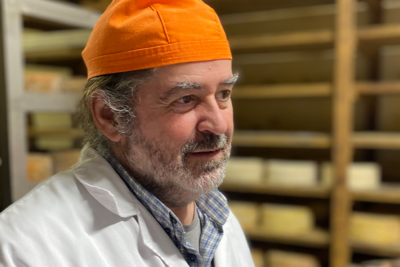
Los Corrales cheese dairy, located in Almedíjar, in the heart of the Sierra de Espadán Natural Park, is one of the most emblematic and renowned projects in the Valencian cheese sector. At the helm is Ángel Valeriano, a key figure both in the consolidation of the dairy and in the defence of artisan cheese as cultural and gastronomic heritage. He is also one of the founders of QueRed, further underscoring his longstanding commitment to the sector. He is joined by Maite, whose contribution has been equally essential to the dairy’s evolution and distinctive identity.
Since its foundation in 1990, Los Corrales has upheld a firm commitment to craftsmanship, high‑quality milk, and the creation of signature cheeses conceived to reflect the character of the surrounding territory. Each cheese aims to convey the essence of the landscape and the cheesemaking tradition of the Sierra de Espadán, turning their production into an authentic expression of the local environment.
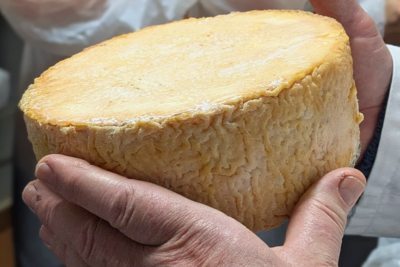
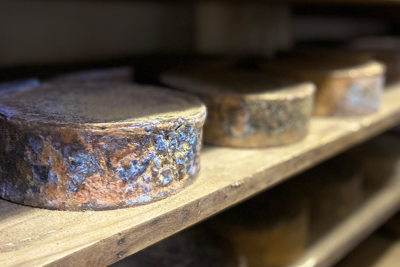
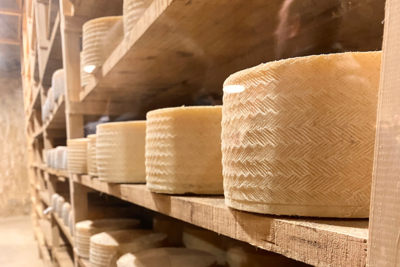
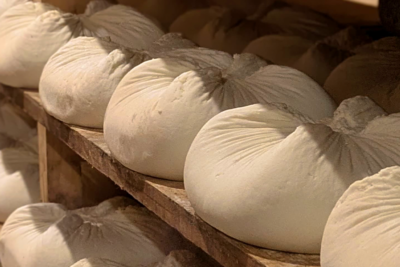
At Los Corrales, they work with raw sheep’s and goat’s milk, carefully overseeing every stage of the process and shaping each cheese by hand. The cheeses are then matured on wooden shelves, following specific times and conditions that enable each variety to develop its unique nuances.
Ángel embodies the type of producer who represents the core spirit of many artisan cheesemakers in Spain: professionals who work with rigour, who have a profound understanding of their territory, and who see cheese not only as a food product but also as a means of transmitting culture and sustaining rural life.
Over the years, the cheese dairy has become a benchmark for artisan cheesemaking in the Valencian Community—a project that combines technique, tradition, and coherence, and one that has helped place the Sierra de Espadán firmly on the national cheese map.
Hoya de la Iglesia: family tradition and innovation in inland Valencia
In the hamlet of Los Pedrones, within the municipality of Requena, lies Hoya de la Iglesia, a cheese dairy deeply rooted in the territory and the livestock tradition of inland Valencia. With more than 25 years of experience, the project was founded by Luis Roldán, who recognised the potential of combining well‑managed livestock farming with honest, high‑quality cheesemaking.
Today, the second generation—Luis, Manuel and Nacho Roldán, the latter a member of the QueRed board—has taken over with a clear commitment: to preserve the family essence while guiding the dairy towards increasingly innovative and sustainable models, closely linked to the rural environment in which they were raised. Their collective work has consolidated a project that honours tradition without losing sight of ongoing development.
One of the pillars of Hoya de la Iglesia is the care of its own herd of Murciano‑Granadina goats. This full management of the production cycle—from daily animal care to milk collection—not only ensures complete control over the raw material but also reinforces the close relationship between territory, livestock and final product. Using their own milk, the dairy produces a wide range of cheeses, from fresh and soft varieties to long‑matured pieces, with the iconic 4 Picos cheese standing out.
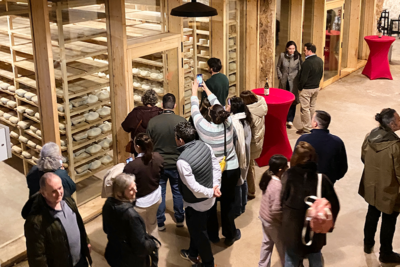
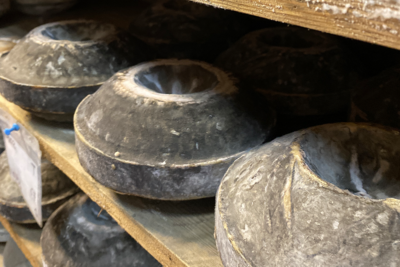
A distinctive feature of Hoya de la Iglesia is its use of underground caves for cheese maturation. Introduced only a few years ago, this approach has provided a natural space for ageing and opened the door to diversifying the project, turning the caves into an attractive site for visits and cheese‑related experiences.
These natural cavities maintain constant temperature and humidity levels, creating ideal conditions for slow, even maturation and allowing each cheese to develop its organoleptic characteristics with coherence and balance.
Overall, Hoya de la Iglesia represents a model in which family, territory and craft are organically intertwined. It demonstrates that innovation can emerge directly from tradition when it is carefully preserved and deeply understood. Their track record and the consistency of the project have established them as a benchmark in inland Valencia, an example of how safeguarding traditional know‑how can continue to drive innovation and excellence.
Time for learning
Another valuable opportunity offered by QueRed was access to specialised technical training. Participants were able to take part in a course on cleaning and disinfection monitoring, as well as on the detection and elimination of Listeria monocytogenes biofilms in cheese‑making facilities. The training was delivered at the Polytechnic University of Valencia by the technical team from Betelgeux Christeyns, a leading company in food hygiene. This course provided an in‑depth look at critical aspects of microbiological control and offered practical tools to optimise cleaning protocols and reinforce food safety in daily production.
In addition, the training experience was enriched with two highly valuable technical visits. The first was to the Interprofessional Milk Laboratory of the Valencian Community, where we learned first‑hand about the quality analysis and control systems applied to milk produced in the region. The second visit took us to the UPV’s dairy goat farm, where we were able to observe up‑to‑date models of animal management, feeding and welfare from a technical perspective.
Finally, during the assembly, QueRed presented the results of the past year, highlighted the most notable activities carried out by each working group, and defined the shared challenges for the coming months. Open dialogue, the exchange of concerns and collective reflection helped guide future lines of work and strengthened the sense of community that characterises the organisation. The venue for next year’s meeting was also agreed: it will take place in San Lorenzo del Escorial, hosted by La Cabezuela cheese dairy.
Special invitation
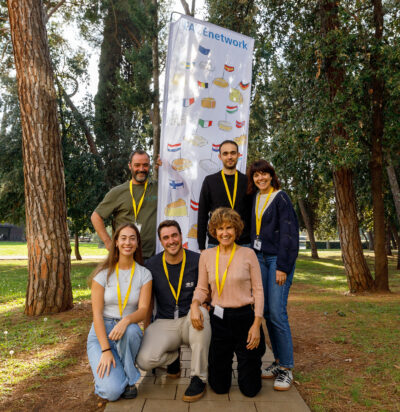
As was to be expected, Leartiker–Esneki Zentroa extended a very special invitation to everyone attending the assembly: this year, we will be hosting the FACE Network 2026 annual meeting, which will take place in the Basque Country!
FACE Network (Farmhouse and Artisan Cheese & Dairy Producers European Network), the European association of artisan cheesemakers, of which QueRed is a member and Leartiker–Esneki Zentroa a collaborating entity, holds its annual assembly in a different country every year.
For the 2026 edition, the central theme will be “Dairy and Cheese Technology”, around which the conference programme will be structured. It will include technical lectures delivered by sector specialists, visits to local cheese dairies, and, of course, practical workshops at the Esneki Zentroa facilities, designed to experiment, learn by doing, and share knowledge among professionals.
In short, it will be an excellent opportunity to reconnect, exchange experiences, find inspiration and, naturally, immerse yourself in Basque culture. We will share more details soon but, for now…
Save the dates: 19, 20 and 21 October!
___________

About QueRed
The Spanish network of farmhouse and artisan cheese and dairy producers (QueRed) was founded in 2013 with the aim of bringing together and representing small and medium‑sized farmhouse and artisan cheesemakers across Spain. Since then, its work has focused on defending artisan production, strengthening its social and economic recognition, and providing specialized training tailored to the real needs of the sector.
QueRed currently brings together more than 500 members, including cheesemakers, supporters, newly established cheesemakers in the process of consolidation, sponsors, and collaborating entities. Among the latter, Leartiker–Esneki Zentroa stands out for its active participation in the Hygiene and Regulations working group.
The internal operation of QueRed is structured through several working groups that make it possible to address the sector’s challenges in a coordinated way. The Hygiene and Regulations group concentrates its efforts on reviewing and adapting the regulatory framework to the reality of artisan cheesemakers and on acting as an intermediary with public administrations. The Training group designs programs, workshops, and learning resources tailored to day‑to‑day needs, while the Communication group promotes the network’s external visibility by producing content and maintaining its quarterly magazine. Alongside these, specific projects, such as the QueRed Route, complement the association’s work and enable progress on broader initiatives.